Yonder Wants to Make the Credit Card Cool Again — and the Idea Is Better Than It Sounds
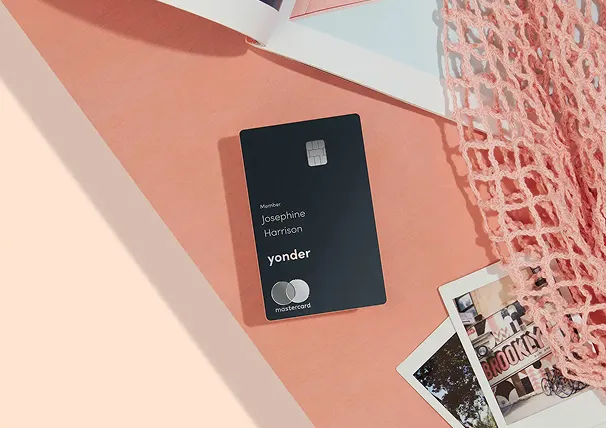
UK fintech Yonder sells access to restaurants, travel and experiences instead of cashback and air miles. It's a financial brand built on curation rather than interest. The model is growing fast; the question is whether the curation survives more customers, markets and revenue targets.
Brands rarely become interesting by doing what everyone else does, only in a nicer colour. They become interesting when they decide to change how we see an entire category, and among the startups Wired UK has singled out as some of Europe's hottest, I think the British company Yonder is an unusually good example of exactly that.
Yonder works with credit and debit cards, which on paper may not sound like the most glamorous business in Europe. Founders Tim Chong, Harry Jell and Theso Jivajirajah, however, spotted an opening in an industry where the offers still revolved around cashback, air miles and fairly convoluted rewards schemes. Their idea was to build a financial brand for younger, urban consumers who would rather have access to restaurants, travel, wellness and experiences than collect points for three years in the hope of eventually claiming a toaster.
When the bank starts behaving like a lifestyle brand
The most interesting thing about Yonder, then, isn't the card itself but what the company has built around it. Members earn points on their spending and can put them towards restaurants, travel, hotels and other experiences, while Yonder partners with local businesses and brands that fit the lifestyle its members want to be associated with. The company describes its own ambition as building a financial brand rooted in community and culture, which is a fair distance from the old banking logic where the customer relationship consists of a statement and an email about revised terms.
This is also where Yonder parts ways with much of its competition. It isn't simply offering a better credit card; it is moving the contest away from interest rates, points and technical features and towards taste, belonging and experience. A restaurant, a hotel or a fitness concept selected by Yonder becomes, in a sense, part of the brand — while Yonder borrows a little of the partner's pull in return. That is classic brand building, even if it happens to sit inside a fintech app.
They aren't selling points, they're selling a life people want
There is an important difference between a loyalty programme that hands out discounts and a brand that makes the customer feel like a member of a particular world. Yonder seems to understand that difference unusually well, using restaurants, travel, events and local partnerships to create a sense of discovery rather than administration.
When the company launched in Edinburgh, for instance, it built the introduction around specific dishes and experiences at local restaurants rather than simply buying billboards saying "We're here now." That's smart, because the new market meets the brand through people and places that already hold cultural capital in the city. Yonder isn't the unfamiliar finance app that just arrived in town; it's the one that seems to know where you should eat on Friday night.
This is a model plenty of companies in fashion, beauty, retail and lifestyle could learn something from. A strong brand doesn't have to own every experience itself, but it does have to be extremely careful about which other brands it chooses to stand next to.
Growth makes Yonder more interesting still
Yonder has also shown that the idea scales. The company reported that membership rose from 20,000 to 60,000 in the six months after it launched a debit card in 2025, opening the service to users who didn't need to apply for credit. At the same time it has been working on international expansion and now has an offering for the Netherlands.
The capital has followed. Yonder previously raised £62.5 million in a funding round, of which £12.5 million was equity and £50 million went towards credit facilities, and NatWest, among others, has since invested in the company. From our perspective, NatWest's reasoning is almost more interesting than the investment itself: the bank pointed to consumers wanting more personal financial experiences that fit their lives and ambitions.
When a large traditional bank invests in a startup trying to turn the bank card into a lifestyle product, you can at least suspect that someone at head office has worked out that future competition isn't only about who has the best banking app.
Yonder's greatest strength could also become its problem
This is where it gets genuinely interesting from a brand perspective, because fast-growing companies tend to run into the same thing: whatever made them attractive in the first place is gradually diluted as more customers, more markets and more revenue opportunities have to be squeezed in.
Yonder's position rests heavily on curation. The restaurants have to feel right, the travel benefits have to feel right, and the partnerships should ideally leave the member thinking that someone with good taste has already done the choosing for her. If the selection one day fills up with offers from any company willing to pay, in the name of maximising sales, much of the point disappears very quickly.
It's the same mechanism as in fashion and luxury. A premium brand doesn't become more desirable because it's available everywhere, and a members' club doesn't become more sought-after because everyone gets in.
BBMB's recommendation: be more Soho House than Mastercard
If we were to give Yonder one piece of advice for the next phase, it would be to resist defining itself as a card company. The card is the distribution format; the real asset may turn out to be the membership, the community, the selection and the cultural position Yonder is in the process of building.
Yonder should therefore develop an even more distinct universe of its own, where partner strategy, events, editorial content, travel, restaurants and other experiences all reinforce the same audience and the same feeling. BBMB works precisely with how brand strategy, storytelling, PR, personal brands and exclusive brand experiences can together create a stronger premium position, and Yonder is a good illustration of why those elements shouldn't be treated as separate marketing projects.
Expansion into new countries is a far bigger brand test than it may first appear. It would be easy to copy the London concept to Amsterdam, Paris or Stockholm, but strong lifestyle brands rarely work best as copy-paste. Yonder needs to find the restaurants, creators, hotels, fitness concepts and cultural settings that carry the right status locally, and then let each city become its own version of Yonder without losing the core identity.
The founders should take up more space too
There is one more asset Yonder could develop more systematically: the founders, and above all CEO Tim Chong. In growth companies, the founder is often a significant part of the company's credibility, particularly when the business is trying to change how consumers see an established category.
Yonder could build a clearer parallel personal brand around Chong as the voice of a new view of money, spending, experiences and loyalty. That doesn't mean the CEO should become an influencer and start photographing his breakfast, but he could take a sharper position in the debate about why the finance industry still communicates and packages its products in a way that feels oddly removed from how younger people actually live. For BBMB, the interplay between the company brand and the leader's personal profile is central, precisely because they can strengthen each other without becoming the same thing.
A credit card apparently doesn't have to be boring
Yonder is interesting because it shows how much is still possible in an old category once you start with human behaviour rather than the competition's product sheets. The company has taken something traditionally marketed with reward points, percentages and airport lounges and tried to turn it into membership of a particular lifestyle.
The next challenge is holding on to that feeling as the company grows. If Yonder can stay selective, locally relevant and culturally interesting while expanding, it could build something considerably larger than another fintech; it could build a brand people actually want to be associated with.
That is a far better position than simply sitting at the top of the wallet.