What Marks & Spencer's Oxford Street Test Store Says About Branding
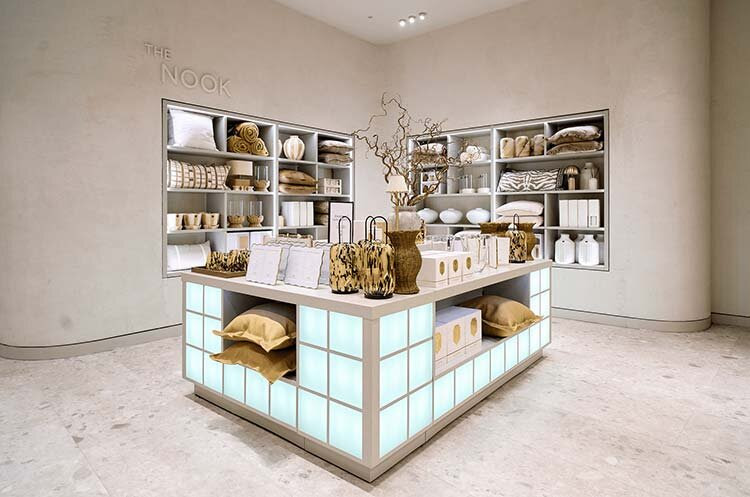
Marks & Spencer has rebuilt its Oxford Street store as a testing ground rather than another flagship. New ideas are tried there before they reach the rest of the chain. Branding deserves the same timing — early, while changing your mind is still possible.
Brand development isn't only about knowing where you want to go. It's also about being willing to test whether you're actually heading in the right direction. Which is why Marks & Spencer's new venture on Oxford Street in London caught my attention.
The Pantheon, a classic department store, has been rebuilt into something considerably more interesting than another handsome flagship. It's designed to work as a testing environment for the next generation of M&S stores. New ideas across fashion, home and beauty are trialled there, evaluated, and then — if they work — rolled out across the rest of the chain.
It's a very sensible way to develop a brand. And yet it's striking how many companies do precisely the opposite. They have an idea, fall in love with it, build the entire concept, launch and hope for the best. This isn't only a large-company problem. If anything, the reverse. Start-ups and growth companies often have even more reason to test early, because every wrong decision costs more when the money, the time and the organisation are all smaller.
It's also one reason we at BBMB like to come in at the testing stage when we work with start-ups. Branding shouldn't arrive last, tasked with "packaging" something that has already been built. It should be there earlier, helping to answer more important questions: Does the audience understand the idea? Does the product feel like the brand you say you want to build? Is the customer experience right? Is there anything here people will actually remember? And does the whole thing hold up outside the meeting room?
M&S is using the Pantheon rather like a laboratory, only with underwear, cushions and men's suits instead of test tubes. Across four floors they're testing clearer product presentation, more curated rooms, digital inspiration, new payment and Click & Collect solutions, and their first made-to-order service for men's suits. Scent, light and music are used to shift the feeling between different parts of the store. What's interesting is that M&S isn't only testing products. They're testing how the brand feels.
And that's a significant difference. A customer doesn't walk into a store thinking, "this zoning really supports the company's brand platform." Thankfully. The customer thinks it feels good in here. Or dull. That things are easy to find. Or a hassle. That they want to stay. Or leave. That's where a brand actually happens — not in the strategy document.
There's a clear parallel here to how many successful innovation companies operate. Apple has long built its retail around the chance to try, experience and understand the products in a physical space. The underlying idea is simple: test, watch what people do, adjust, test again. It sounds almost absurdly obvious, and yet plenty of companies happily skip exactly that part. Particularly when the founder is very taken with their own idea. And founders are, for understandable reasons, quite often very taken with their own ideas.
That's when an outside perspective becomes invaluable. Not to declare the idea wrong, but to find the gap between what the company believes it's communicating and what the customer actually perceives. It's precisely why I think branding belongs earlier in the process rather than later. While it's still possible to adjust the product, the positioning, the story, the audience and the experience without first having to dismantle something that has already cost a great deal of money and considerably more pride.
There's one more thing about M&S I find interesting. The company isn't trying to shed its history. The Pantheon has stood on Oxford Street since 1938, and the strategy is largely about keeping what makes M&S distinctive and modernising the rest. It's the same question many established fashion, retail, beauty and design brands wrestle with: How do we change without becoming someone else? How do we become modern without looking exactly like every other modern brand?
It isn't always easy. But testing an idea on a smaller scale before deciding it's brilliant is at least a good place to start. M&S has an entire department store at its disposal. A start-up might have only a first collection, a showroom, a pop-up, a prototype or a new webshop. The principle is the same. Don't build everything first and ask the customer afterwards. Let the customer help show the way while you still have room to change course. It may feel less dramatic than a big launch. But it's usually far cheaper than the alternative: discovering after the fact that it was a very beautiful idea nobody wanted.