trawa sells electricity to businesses — its brand needs to be bigger than the bill
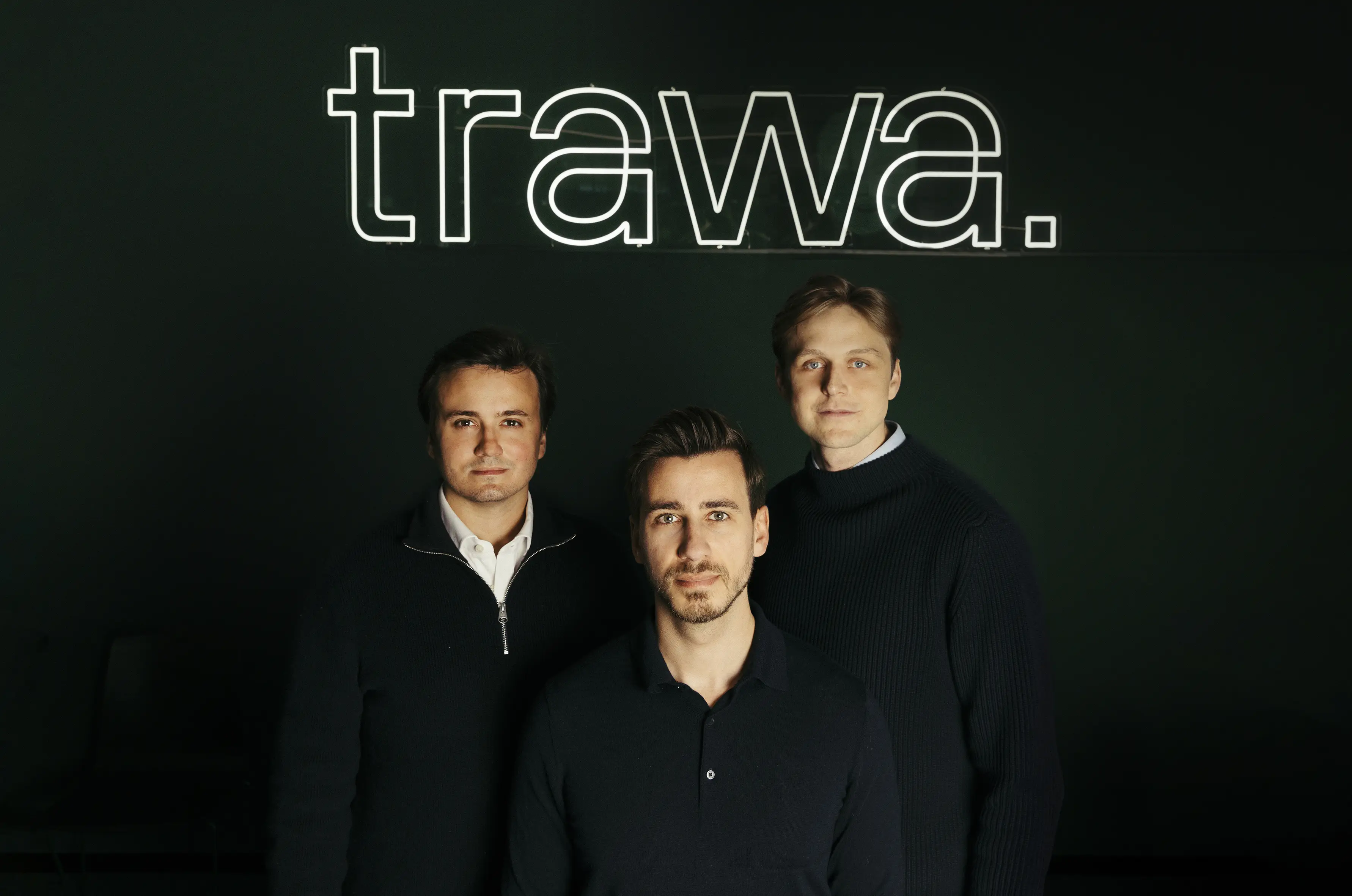
Electrons are identical whatever the supplier — understanding is what the customer pays for. Berlin's trawa has built a business on making the energy market manageable for smaller companies, but "AI plus sustainability" is no longer a position.
Most business leaders would rather think about their electricity contract as little as possible. The power should be there, the cost should be reasonable, and the invoice should be legible without a small research project. Berlin-based trawa has built its business around exactly that frustration, and it appears on Wired UK's list of Europe's hottest startups.
trawa targets small and medium-sized companies above all, combining renewable electricity, energy trading and energy management software in a single offer. The company's system analyses a business's consumption and helps the customer buy energy more flexibly, while giving the operation better control over costs and emissions. trawa describes itself as a complete energy partner for smaller and mid-sized companies, and says the solution can cut customers' electricity costs by up to 35 percent.
This is a category where the product itself is invisible and where many competitors are selling precisely the same electrons. Which makes the ability to render the offer intelligible, relevant and distinct unusually important.
From electricity supplier to control over the company's energy
Wired describes how trawa was founded after Russia's invasion of Ukraine, when European companies got a first-hand sense of how quickly energy prices and supply could change. The company works with a combination of energy trading and software intended to help businesses manage purchasing, consumption and flexibility rather than simply buying a traditional fixed contract.
In 2025 the company raised 24 million euros in a Series A round led by Headline, with Norrsken VC and existing investors among the participants. trawa tied the funding to its ambition to expand its integrated solution for electricity supply, energy management and flexibility at a moment when high energy costs are squeezing European industry.
From a brand perspective, I find the phrase "energy partner" more interesting than the AI technology itself. It moves trawa from being one more software company to being someone who helps management take control of an area that affects both the finances and the sustainability agenda.
That is where the brand should keep developing.
Sustainability no longer works as a position
A few years ago an energy company could get quite far by writing "green energy" on the website, photographing a few wind turbines and applying a generous amount of green to the visual identity. That position is becoming harder to own, because almost the entire energy market now speaks the same language.
trawa therefore needs to be careful not to become another company whose identity is reduced to AI plus sustainability. Both elements matter in the product, but neither is especially unusual as a marketing message.
What is more interesting is what the company does for the customer. A manufacturer should be able to understand when electricity ought to be bought, how the operation can use it more intelligently, and how cost risk can be reduced. That kind of control is considerably more concrete than saying the technology is intelligent and the energy renewable. trawa also positions its offer around precisely that combination of energy purchasing, cost control and energy management.
For many smaller companies, energy remains an area where you would rather have someone else understand the technical side. Whoever becomes the trusted person in that room has a stronger brand than whoever happens to be cheapest on today's price list.
BBMB's recommendation: give energy a more human language
In BBMB's view, trawa has a great deal to gain from making its communication less technology-driven and more situation-driven. Instead of mainly describing systems, algorithms and energy markets, the company could show the working lives of the people who actually use the service: the finance director at a factory, the owner of a growing production business, the operations manager who suddenly watches energy costs eat into the margin.
That does not mean playing down the technology. It means explaining it through consequences people grasp immediately. A company that has finally gained control of a cost that used to jump up and down from month to month is a better brand story than one more illustration of an AI model.
For BBMB the principle is the same one that applies in fashion, lifestyle or design: the product has to connect to a clear story about which problem the customer is spared and what position the brand wants to hold in their life or their business. Strategic storytelling is not a layer of advertising applied on top of the product; it is the articulation of why the product should matter.
Business customers feel things too
B2B marketing has a peculiar habit of assuming that people stop having personalities the moment they walk through the office door. The images turn grey, the sentences get longer, and suddenly everyone is expected to be thrilled by "integrated end-to-end solutions".
trawa has the chance to go the other way. Energy costs, uncertainty and industrial competitiveness genuinely affect companies, so the brand can be built around reassurance, control and decisiveness rather than technical specifications.
It would also set the company apart from both traditional energy suppliers and a growing group of energy tech startups. Many can offer data; fewer can create the feeling that someone actually has the situation in hand.
The leadership should be visible beyond the energy sector
trawa is also well placed for personal branding around its leadership. The company sits in the middle of the debate about European industry, energy prices, electrification and corporate climate transition, which means its representatives can take a role well outside their own product category.
When the company raised its Series A, it framed the funding as an investment in Europe's industrial competitiveness and emphasised how high energy prices affect businesses across the continent. That is a considerably larger story than selling electricity contracts, and it allows the leadership to take a position on questions that CEOs, investors and policymakers are also debating.
BBMB would therefore build a clearer thought leadership strategy in which the founders and management appear in business media, at conferences and in owned channels with a consistent perspective on what the energy market means for European companies. The aim should not be to comment on every new price quotation, but to become the people the market seeks out when it wants to understand what the developments mean.
trawa needs to become the company that makes energy intelligible
The long-term brand opportunity for trawa, as I see it, does not lie in being "an AI company in energy". That description tells you which technology it uses and which market it operates in, but very little about why anyone should care.
A more valuable position would be to become the company that makes a complicated energy market manageable for ordinary businesses. Then AI, renewable electricity, purchasing and energy management can serve as proof of the promise rather than all competing to be the headline message.
If trawa can make energy as intelligible to a business leader as bookkeeping or payroll, it will have built something far harder for competitors to copy than a technical feature.
It is also more appealing than one more press photo of a wind turbine.