The Hotel Room as Showroom
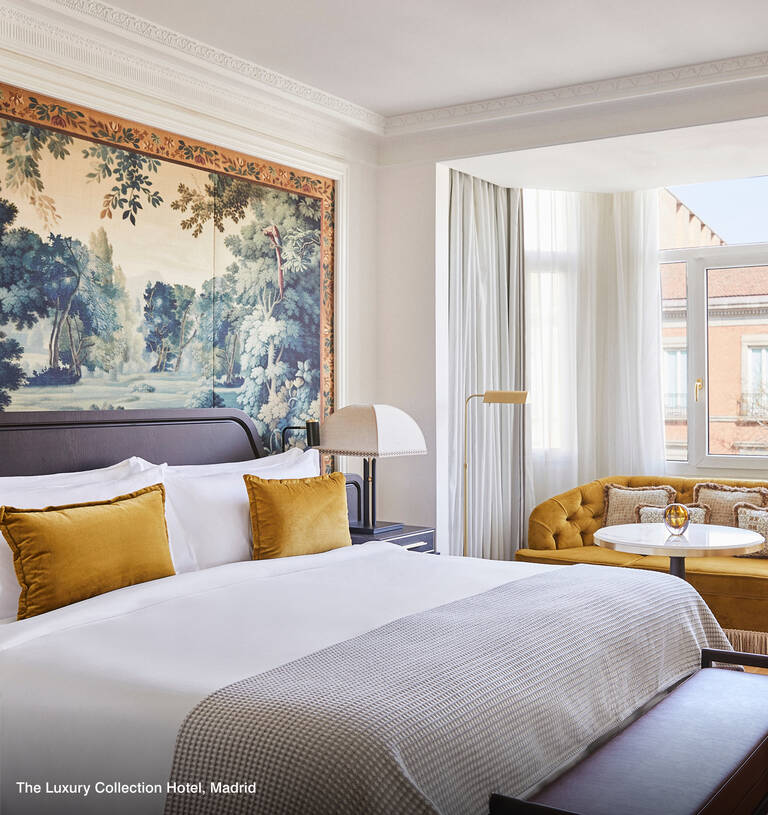
Marriott now sells the furniture, lighting and textiles from its hotel rooms. It's less about interiors than about letting the relationship with the guest continue past checkout — and about a question more brands should ask: what is it customers actually fall for in us?
Brand development gets interesting when a company manages to extend its relationship with the customer long after the purchase itself is over.
That is precisely what Marriott is attempting with its new Design Shop. The hotel group now sells furniture, lighting, art, textiles and other interior pieces inspired by its hotels and destinations. The logic is simple: if a guest likes how a hotel feels, that feeling should be available to take home.
It is smarter than it first sounds. Marriott doesn't really sell hotel nights. It sells environments, atmospheres and experiences. We all know the effect. You come home after a few days at a genuinely good hotel and suddenly your own pillow feels oddly flat, the bedroom lamp looks wrong, and the bathroom looks like something the local council drew up in 1994. Hotels are remarkably good at making us want to change our own homes.
Now Marriott is turning that exact feeling into a business. Through the Design Shop, guests can buy pieces of the world they have just been living in. W Hotels gets its own aesthetic, Westin another, and collections inspired by the French Riviera and the JW Marriott Hotel Tokyo, among others, are on the way. The hotel room becomes more than a room. It becomes a showroom.
From a branding perspective, I find this genuinely interesting. When a brand is strong enough, the customer sometimes doesn't just want the product. They want to take home a small piece of the world surrounding it. It's the same mechanism we see in strong fashion and design brands. A fashion house starts with clothing and eventually sells fragrance, furniture, hotels or tableware. Not because customers suddenly need another coffee cup, but because they want to buy their way closer to the feeling the brand represents.
Marriott is doing the same thing from the opposite direction. The environment is already built. Now they've started selling it.
So the most interesting part isn't the furniture. It's how the venture shifts the boundary of what Marriott is. The guest checks out, but the relationship with the brand doesn't have to. A pillow at home, a lamp in the living room, perhaps the hotel's signature scent, can keep reminding you of the experience long after the trip. Peggy Roe at Marriott puts it plainly when she says the guest experience no longer ends at checkout. That's close to an entire branding strategy in a single sentence.
Marriott also seems to have understood something else that matters: the moment of purchase has to sit close to the feeling. Which is why the products are promoted with QR codes in the rooms, on in-room screens, and through digital communication to Bonvoy members. That makes sense. It is considerably easier to sell a hotel pillow while the guest is still lying on it thinking it's wonderful than three months later, once ordinary life has intervened.
There's a lesson here for far smaller brands too. Many companies still think quite narrowly about what they sell. A fashion company sells clothes. A beauty company sells skincare. A hotel sells rooms. But for the customer, the product is often only one part of a larger experience. So the question becomes: what is it customers actually like about us? And are there more ways to let that feeling continue?
This does not mean every company should start selling coffee tables simply because it happens to have a good-looking office. That would get messy fast. But when a product extension feels natural and builds on something customers already value, it can generate new revenue and strengthen the brand at the same time.
For premium brands this is particularly interesting. There, the environment, the service, the materials, the scent, the music and the whole feeling around the product are often at least as important as the product itself. The clearer that world is, the more room there is to develop the brand without losing its core.
That is essentially what Marriott is doing here. They aren't just selling objects from the hotel room. They're selling the chance to keep living at the hotel a little, after you've gone home. It's a rather elegant business idea. Especially for those of us who always miss the hotel bed most.