Shop Circle Is Buying Software Companies at Speed — the Hard Part Is the Branding
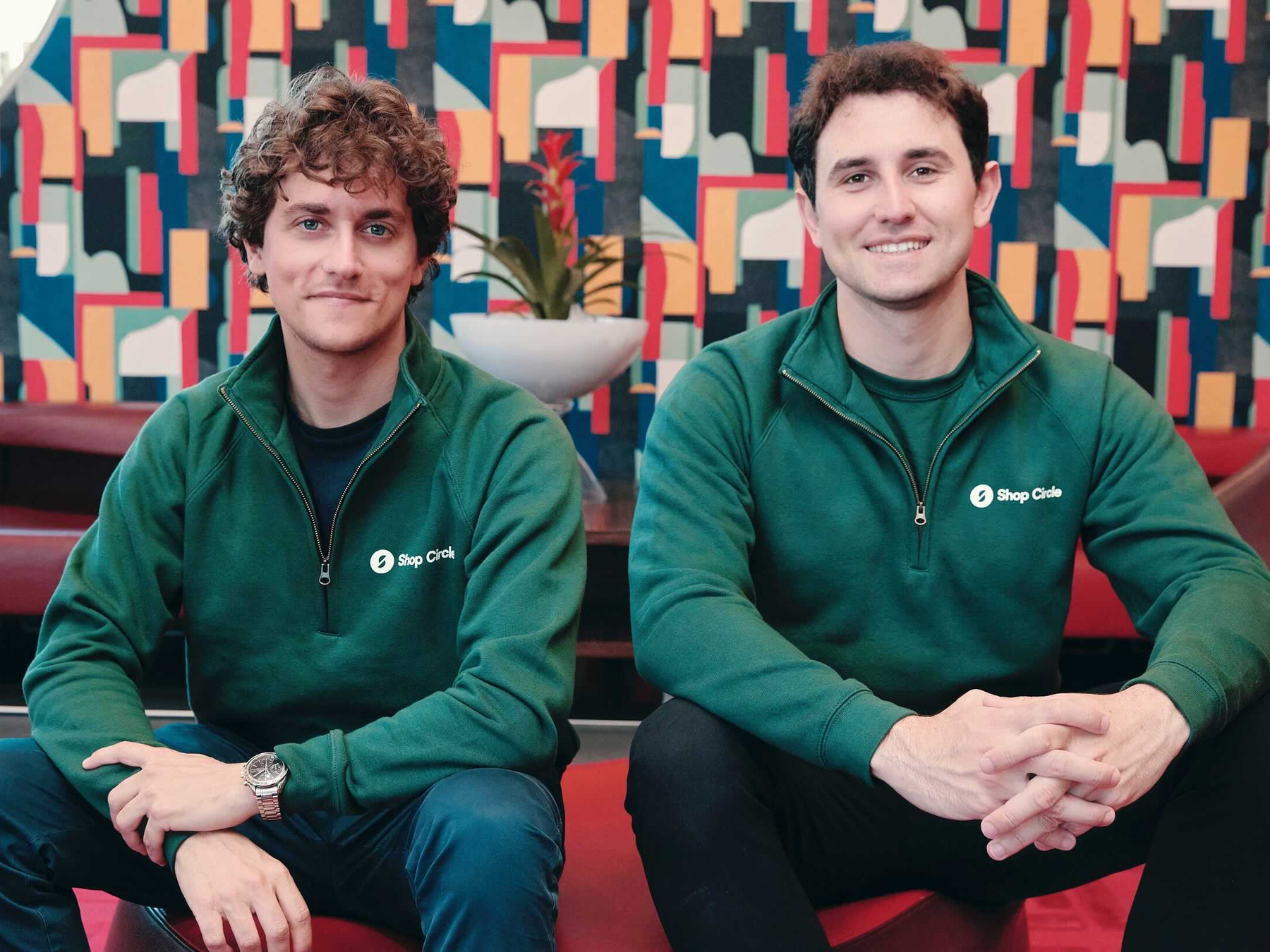
Shop Circle has acquired software companies at pace and built an impressive portfolio. The harder task comes next: explaining what the name Shop Circle actually guarantees every time it appears beside an acquired brand. Without that answer, the circle is only an ownership structure.
In just a few years, Shop Circle has acquired a long list of software companies and gathered them under one owner. Wired UK names it among Europe's hottest startups, which is easy to understand given the growth, the acquisitions and the number of e-commerce businesses using products from the group. From a brand perspective, though, a different question is the more interesting one: how long can you keep buying strong smaller companies without having an equally clear identity of your own?
The London-based company was founded by Luca Cartechini and Gian Maria Gramondi with the ambition of acquiring, developing and consolidating the software that e-commerce businesses need to run their operations. Wired describes Shop Circle as a kind of one-stop shop for online retailers, with tools spanning customer experience, conversion, marketing and AI. The business model is easy to grasp. The brand model is considerably more complicated, because every new acquisition makes the question of what Shop Circle actually stands for a little more pressing.
Today, Shop Circle describes itself as an AI-native home for business-critical software and says the group has completed a large number of acquisitions in only a few years. The company also states that hundreds of thousands of businesses use software from the portfolio, which shows how quickly it has moved from a pure e-commerce case towards a broader software group.
That is impressive commercially, and even more interesting from a brand perspective, because rapid growth through acquisition creates a problem a spreadsheet rarely solves: what are all these companies supposed to mean together?
Buying products is easier than buying an identity
Shop Circle's original model was appealing because the problem was easy to understand. E-commerce businesses run dozens of apps and technical services, and Shop Circle set out to bring good tools under one roof. When the company raised $120 million in its Series A, it described the ambition as building a kind of operating system for e-commerce brands, and said at the time that more than 100,000 online retailers were using the group's products.
During 2025, Shop Circle raised further capital and made clear that the ambition was broadening from pure e-commerce towards B2B software and AI. This is where the brand question grows considerably larger. If Shop Circle is simply the owner of a portfolio of good software products, the end customer has little reason to care about the name Shop Circle. But if the ambition is to become a leading international platform for business-critical software, the parent company has to stand for something beyond an ability to make good acquisitions.
In other words, someone has to decide what the circle around all these companies actually means.
There is a smart detail in how Shop Circle operates
Shop Circle states explicitly that the companies it acquires get to keep their identity, their people and their product vision. The decentralised model is designed to let them retain autonomy while gaining access to expertise, AI, capital and a larger international ecosystem.
From a brand perspective, that is sound thinking, because smaller software companies have often built trust and strong user relationships long before a larger owner appears. Acquiring a well-liked company on Monday and changing the name, logo and tone of voice on Tuesday is an efficient way of telling customers that someone at head office considers a brand deck more important than their relationship with the product.
There is an opposite risk, however. If every company continues entirely on its own, Shop Circle may remain invisible and miss the chance to build far greater brand value at group level. This is where the work on brand architecture becomes decisive.
BBMB's recommendation: decide what Shop Circle guarantees
BBMB would not advise Shop Circle to put the same logo on everything it buys. We would instead define what the name Shop Circle should promise every time it appears alongside a portfolio company.
That promise might centre on quality, long-term ownership, intelligent use of AI, fast development and respect for the entrepreneurs behind the products. Shop Circle already highlights long-term value creation, preserved identity and autonomy as central to its model, so the raw material is there. What it now needs, to a far greater degree, is to become a brand idea that is felt externally — not only an argument aimed at founders considering a sale.
This sits close to BBMB's work with strategic brand development and repositioning. A company that grows changes, but the positioning has to evolve before the market starts writing the story on the company's behalf.
In practice, Shop Circle can operate much as a good luxury conglomerate does. LVMH does not need to rename Dior "LVMH Fashion Product Number Seven" for the group to create value. The individual houses keep their identity, history and customer relationships while the owner contributes capital, expertise, distribution and status. Shop Circle seems to be moving intuitively towards a similar model for software, even if the environment involves more APIs and fewer champagne cases.
AI must not become the entire personality
The second area where I would be careful is the AI positioning. Shop Circle has good reason to talk about AI, since the technology is embedded both in the company's products and in how the group approaches its acquisitions. It has also built shared technical solutions intended to connect data and knowledge across the software portfolio.
The problem is that roughly every other tech company right now wants to be AI-first, AI-native or AI-powered. The words can be accurate and still make the brand less distinctive, because customers, investors and talent already hear the same phrasing from almost every direction.
Shop Circle therefore needs to be clearer about what its use of AI actually makes possible for customers, founders and the companies it acquires. The technology should be the proof of the positioning, not the positioning itself. A company rarely becomes interesting because it uses a particular technical architecture; it becomes valuable when the technology solves a problem better than the competition does.
The founders have an unusually strong personal branding case
I would also give Luca Cartechini and Gian Maria Gramondi a clearer role in the brand strategy. Their story is interesting because they are not building yet another SaaS product, but attempting to create a new kind of European software group by combining entrepreneurship, acquisition and AI.
There is an opportunity here to build thought leadership around how good tech companies should grow after an acquisition, why founders need not see a sale as the end of what they created, and how European software companies can scale without copying Silicon Valley in every detail. Shop Circle's own communication already speaks clearly to founders, emphasising that their product vision and identity can live on after an acquisition. A stronger personal brand for the founders would make that promise considerably more human and more credible.
For a company whose continued growth depends in part on capable entrepreneurs actually wanting to sell to them, trust in the people behind Shop Circle is not a minor PR detail. It is part of the business model.
The next big acquisition should be a clearer position
Shop Circle has already done the part of the job that tends to attract the most attention: the capital is there, the companies are being acquired and growth is high. The next phase is more subtle, because Shop Circle needs investors, entrepreneurs, customers and talent to understand why this particular group of companies belongs together, and why Shop Circle is a better owner than anyone else.
If it succeeds, the company will have built more than a software portfolio. It will have built a brand that makes every future acquisition more valuable from the day it moves inside the circle.