Party leaders' personal brands – Ulf and the round glasses
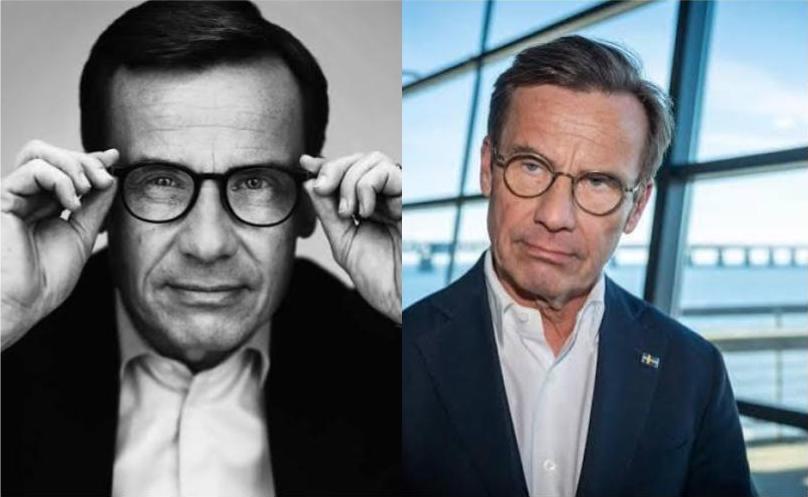
Ulf Kristersson's visual language says exactly what he wants to be: prime minister. Dark suit, round glasses and measured body language build authority — but that same control makes it harder for voters to know the person behind the role. The challenge isn't the wardrobe.
Ahead of the coming election, we are looking at the personal brands of Sweden's party leaders and how they have been sharpened during the campaign.
Ulf Kristersson may be the Swedish party leader whose visual brand states most plainly exactly what he wants to be: prime minister. Dark suit, white or pale blue shirt, tie, neatly combed hair, and the round glasses that have become such a natural part of his appearance that it is hard to picture him without them.
It is classic, controlled and consistent — which is, of course, no accident. When BBMB works with personal brands, we don't simply ask whether someone is well dressed, but whether the visual expression supports the position that person wants to own. In Kristersson's case the link is unusually clear, because clothes, body language, speech and political role almost always tell the same story.
My impression is that his personal brand rests above all on professionalism, control, competence and statesmanship — while in recent years he has worked more actively at adding a more human, less formal side.
A wardrobe built for the role
Kristersson has worn a suit so consistently over so many years that it has effectively become his work uniform. Navy dominates, the shirts are usually white or pale blue and the ties classic, while more experimental colours, patterns and cuts are rarely given much room.
This suits his political brand very well. He does not primarily want to be read as a rebel, an outsider or a populist protest politician, but as the person already seated at the head of the table, chairing the meeting.
Clothes work that way long before anyone has opened their mouth. A dark, well-tailored suit with shirt and tie has always signalled authority, order and formality, which reinforces the role of head of government both at home and abroad.
There is also a detail worth noting with Kristersson: the suits almost always fit exceptionally well. For someone of relatively slight, slim build, proportion matters that much more, since oversized garments could easily take over the person rather than reinforce him. Here the fit is consistently considered, with narrower silhouettes and clean lines that make him read as more distinct.
That is personal styling at its best, because the viewer isn't meant to notice the styling — only the person.
The glasses have become part of the brand
The round glasses may be Kristersson's strongest visual signature, working much the way a consistent haircut, colour or accessory does for other public figures. They create immediate recognition and sit well with the intellectual, controlled bearing he has built.
This is a detail many people underestimate when working on their personal brand. You don't have to keep inventing something new to be remembered; recognition is usually created by the opposite — by letting certain elements stay consistent over a long time.
Kristersson, in other words, already has a visual language that works, which is considerably more valuable than trying to invent a new Ulf ahead of every campaign.
The body language reinforces the control
His body language broadly follows the same line as the wardrobe: he tends to stand upright, uses fairly contained gestures and keeps a composed physical presence in interviews and debates.
That works very well when he represents Sweden at summits, press conferences and in international settings, where the job is to signal stability and authority. The same control can become a little limiting, though, when voters are trying to get to know the person behind the office.
This is also where the campaign becomes interesting from a personal branding perspective. During 2026 we have seen him in more personal interview formats and less formal settings, including answering audience questions on both policy and more private subjects. It is an effective way to broaden the picture without changing the core of the brand.
You don't have to take off the suit to be personal — but it sometimes helps to leave the podium.
The language is conversation rather than grand rhetoric
Kristersson's language sits close to his visual presence. He likes to reason, to explain context, and often sounds more like someone talking through a problem than someone delivering a classic political stump speech.
That reinforces the image of the rational, problem-solving leader, but it also presents a challenge in a campaign, because a prime minister needs to be seen not only as competent but also able to paint a clear picture of where the country is heading.
In this year's campaign, that question has become particularly interesting. In Almedalen, Kristersson both highlighted the government's record and tried to articulate a picture of the future in which Sweden would, among other things, become one of Europe's wealthiest countries again. At the same time, his ability to build a larger story about the future has been debated and criticised by political commentators.
From a brand perspective, that matters. It is possible to be highly credible as a steward without automatically being equally strong as a visionary — and going into an election, a sitting prime minister really needs to manage both roles.
The private Ulf has been given a little more room
Something has shifted in Kristersson's personal communication over the past few years. Training, family, dogs and more everyday situations have been allowed to appear alongside cabinet meetings, international summits and press conferences.
Even his clothes have become material for social media, where he has taken part in an outfit check and talked about what he is wearing.
It would have been fairly hard to imagine a Swedish prime minister doing the same thing twenty years ago.
I think it is smart, because it softens a personal brand that otherwise risks becoming very correct. Someone always photographed in front of Swedish flags and microphones eventually turns into an institution, whereas someone who occasionally shows humour, time off and ordinary life is easier to relate to.
The balance matters, though. Too much private content would collide with the authority Kristersson has spent years building, while too little risks leaving him more distant than a modern campaign allows.
My advice: keep the suit, but show more of the person in it
I wouldn't make any major change to Ulf Kristersson's visual style ahead of the election. It would be odd to abandon an identity that is already established and instantly recognisable. The suits, the colour palette, the glasses and the orderly bearing all support his position as prime minister, and they work well in the international settings where he so often appears.
What I would do is keep broadening the environments and situations in which we meet him. More conversations with people, more informal interviews and more contexts where humour and personality are allowed in can complement the tightly controlled prime ministerial profile.
I would also work more deliberately with the contrast between prime minister and campaigning party leader. When he represents Sweden, the expression should stay strict, international and statesmanlike; out on the campaign trail he could gain from something slightly more relaxed — a shirt without a tie, knitwear, or a well-cut jacket instead of a full suit where the setting allows.
The biggest challenge, though, isn't in the wardrobe, because the wardrobe is already doing its job. The challenge is to let the same personal brand communicate more feeling, more future and more personality without losing the competence and control that have become Kristersson's clearest assets.
A strong personal brand doesn't need to be rebuilt for every new phase of a career, but it does need to evolve when the task changes. Ulf Kristersson has already succeeded in creating the image of how he believes a prime minister should look; this campaign is more about showing voters who the person in the suit actually is.