Nothing – the startup that made the mobile phone interesting again
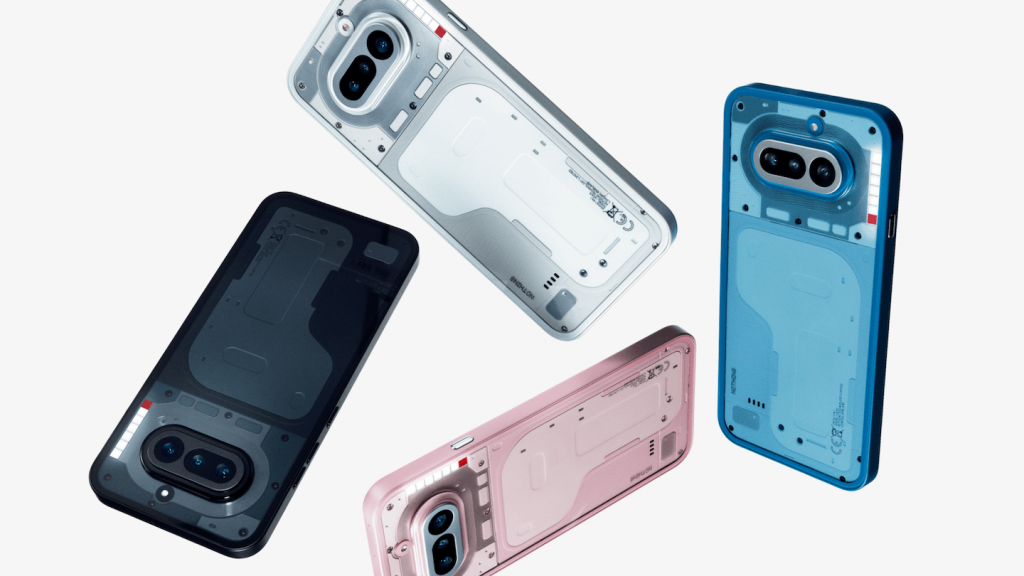
In a market where most smartphones look alike, Nothing has made difference its business model — and it shows in both revenue and recognition. Transparent design, light-based interfaces, a community that shapes the products. The question is what happens to that distinctiveness at scale.
The hardest part of brand building is rarely producing a good logo or a strong campaign. The hard part is getting people who have already seen a hundred versions of the same product to stop at yours. That is roughly where Nothing comes in.
The British technology company has been named by WIRED UK as one of Europe's hottest startups. It isn't hard to see why. In a market where most smartphones look like close relatives who happened to buy the same black suit, Nothing has done something unusual: built technology you can recognise from across the room. And recognition, as it happens, is rather useful if you want to build a brand.
A tech company that doesn't want to look like a tech company
Nothing was founded in London in 2020 by, among others, Carl Pei, previously a co-founder of OnePlus. The company makes smartphones, headphones and AI-based digital tools, and describes its own ambition as making technology fun and more human again. It has also built a global community of millions of people.
WIRED singled out the Nothing Phone 3a, which scored 8 out of 10 in the magazine's review in spring 2025. The write-up pointed to the combination of a reasonable price, good performance, good cameras and a design language that stands out. The same write-up stated that Nothing had doubled its annual revenue to more than 500 million dollars and passed a billion dollars in cumulative sales. That is a fair amount of money for a company called Nothing.
But the name is also a clue to why the company is interesting. Nothing isn't selling yet another phone with a slightly better camera, a slightly faster processor and a press release full of the word "revolutionary". They are trying to build a world of their own.
Where Apple polishes everything away, Nothing puts it on display
The most obvious element is the design. Nothing has turned its transparent and semi-transparent products into a clear signature. Components are left visible, the graphics have an almost industrial feel, and the company's phones have used light-based interfaces such as Glyph for notifications and functions. Later generations of the Phone series continue to use the Glyph concept as a central part of the product experience. This might sound like a detail. It isn't.
For two decades Apple has built one of the world's strongest brands around perfection, simplicity and control. Samsung competes on technical breadth, innovation and enormous manufacturing capacity. Nothing isn't trying to become a paler version of either. Instead, they have made being different the business idea itself. That is smart. For a smaller company taking on giants, "we're almost as good" is probably the most expensive positioning in the world.
The product is only half the brand
The most interesting thing about Nothing, then, may not be the phones but the work around them. The company describes its community as part of product development and lets users influence both the products and how the brand expresses itself. Nothing also stages launches, drops, events and other activities where creators and fans become part of the brand world.
There is a lesson here for companies far outside the technology sector. Strong modern brands are not built on advertising alone. They are built by giving people a role in the story. It might be a fashion customer waiting for the next limited drop. A design client who recognises the material before she sees the logo. A startup founder whose followers feel they have been part of the journey since the first funding round. When it works, the customer stops being an audience and starts becoming a member. That is considerably harder for a competitor to copy.
Why Nothing is a startup worth watching
Nothing has also chosen a market that is hardly short of competition. Quite the opposite. Starting a new smartphone company after Apple, Samsung and a handful of Chinese manufacturers have spent years and billions dominating the category is a bit like opening a new department store across the street from Harrods and announcing: "We thought we'd do it slightly differently." That takes confidence, but also discipline.
Nothing has built its own hardware supply chain, international distribution and a visual language the company itself describes as immediately recognisable. At the same time, it is shifting focus increasingly towards AI and how the next generation of operating systems and personal technology should work.
That makes the company interesting from a brand perspective. They didn't build the technology first and then ask the marketing department how to package it. Design, product, community and communication appear instead to be parts of the same idea. Which is exactly how it should be.
BBMB's recommendation: don't let Nothing become just another big tech company
Success has an irritating downside. When a distinctive brand grows, more people, more markets, more products and more decision-makers get involved. Suddenly what once felt idiosyncratic has to work for everyone — and that is usually when the fun disappears.
BBMB's most important recommendation to Nothing going forward would therefore be to protect its distinctiveness almost obsessively. The company shouldn't try to look more established simply because it is getting bigger. On the contrary, it should keep reinforcing the visual identity, the unconventional language and the sense of being the creative outsider of the technology world. Nothing already has something far larger companies spend enormous sums trying to buy after the fact: personality. It should guard it carefully.
At the same time, the story needs to grow from "the phone that looks different" into something larger. If the company is serious about AI, operating systems and a new kind of relationship between people and technology, that vision needs to become clearer. Design can make us look the first time. A strong idea makes us keep following the brand.
There is also potential to develop Carl Pei's personal brand more deliberately alongside the company. For startups, the founder can act as megaphone, culture carrier and human face all at once. That is particularly valuable when a company sets out to challenge an entire category. For BBMB, the link between the corporate brand and the leader's personal profile is central: both must tell the same story, from different angles. BBMB works with strategic brand development, storytelling and personal branding for growth companies and profiles building a clearer premium position.
So Nothing should stay a little strange. A little playful. A little more fashion house and cult brand than traditional electronics giant. Because in a market where almost anyone can build a good phone, it isn't necessarily the best product that becomes the most interesting. It's the one you remember.