Kittl Turned Design Into a Consumer Product — Now the Brand Needs to Be as Sharp as the Tool
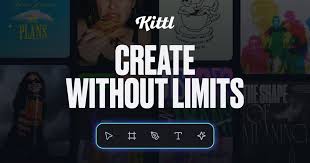
When AI makes every template and feature copyable, offering the most is no longer enough. Kittl needs a taste of its own: curated visual worlds, collaborations, and a selection worth following. Supply is already infinite — judgement is the scarce commodity.
Kittl has a fairly pleasant problem. The company has made advanced graphic design available to people who aren't designers, in a market already crowded with services promising roughly the same thing. Wired UK still names the Berlin company among Europe's hottest startups, which makes the question of the brand at least as interesting as the software itself.
Kittl lets users create logos, labels, social media assets and other graphics using ready-made templates, typefaces and design tools. The platform serves both professional creatives and people who simply need something that looks good without first earning a degree in graphic design.
The competition isn't only Canva
The obvious comparison is Canva, but Kittl's real challenge is bigger than that. AI has made it possible for almost any design platform to generate images, copy, layouts and variations in seconds, which means features are becoming easier and easier for competitors to replicate.
So Kittl needs to own a clearer aesthetic position. If customers choose a platform purely on template count, the company eventually ends up in a feature war where someone else can always add another ten thousand.
A design brand ought to have a taste of its own.
BBMB's recommendation: curate harder
I'd like to see Kittl develop more as a creative brand and less as a large digital warehouse. The platform could work more deliberately with curated visual worlds, collaborations with designers, fashion labels and illustrators, and limited design packs — the kind of thing that makes people follow Kittl for what the company thinks is good.
That matters especially as AI makes supply almost infinite. The more images and templates we can generate ourselves, the more valuable someone becomes who is willing to say which ones are actually worth using.
It sits close to BBMB's work with premium positioning, storytelling and visual direction, where exclusivity isn't created by offering everything to everyone but through a clear selection and a consistent identity.
The founders can be arbiters of taste, too
Kittl also has the opportunity to use its founders and creative leaders more actively as public voices. They can talk about how AI is changing design, why human taste still matters, and what happens when anyone can suddenly make a logo in three minutes.
That's a more interesting conversation than another demo of a new AI button. After all, Kittl isn't only selling the ability to produce more graphics; the company needs us to believe we can produce better graphics.