Birkenstock Builds Its Stores From the Same Materials as Its Shoes
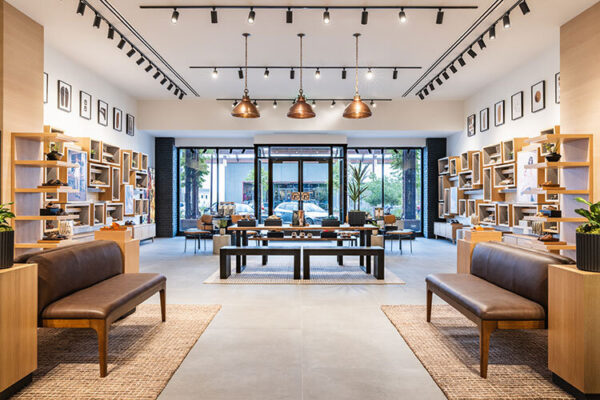
A strong brand should be recognisable even with the logo removed. Birkenstock's new stores are built from cork, felt and leather — the same material world as the products. The store doesn't just sell Birkenstock; it feels like Birkenstock.
Brand identity lives in more than a logo. It's felt in materials, colours, shapes, sounds, scents and details. That's why I stopped at Handelstrender's piece on Birkenstock's two new stores in Boulder and West Palm Beach. The stores are built with cork, felt and leather — materials that don't just look good, but connect directly to Birkenstock's history, products and craft.
This is branding at its best. Because a strong brand should be recognisable even if you take the logo away. A customer should be able to walk into the room and understand who's behind it. It's much like meeting someone with a clear personal style. You don't need to read the name on the business card. You know who it is anyway.
What Birkenstock is doing is fairly simple, but very consistent. They use the same material world in-store that customers already associate with the products. Cork is perhaps the clearest example. It already sits close to the brand's core, and here it becomes part of the environment itself. The result is that the store doesn't just sell Birkenstock. It feels like Birkenstock. That's an important difference.
Plenty of companies still treat store environments as though retail were a separate discipline from branding. First someone develops the brand platform. Then someone builds a store. Then someone else handles social media. And in the end it all looks like three different companies that happened to be given the same logo.
That's when a brand starts to weaken. Because the customer doesn't divide the experience up that way. The customer sees the whole. The product, the space, the staff, the packaging, the online shop, the campaign and the Instagram feed all become one single impression. If everything pulls in the same direction, the brand gets sharper. If everything says something different, it just gets noisy.
It's also why material choices can be so strategic. Cork, felt and leather communicate something before anyone has read a single line about the brand. They signal naturalness, tactility, craft and function. That sits close to what Birkenstock already stands for, and therefore reinforces the identity rather than attempting to invent a new one.
For fashion, beauty, lifestyle and design brands, the store is the only place where the brand can be experienced with every sense at once. A store can be a showroom, a stage and a brand manifesto all at the same time. But only if you actually know what you want to express.
It's easy to assume that a new store has to feel new. New colour palette. New materials. New concept. New everything. But if the brand already has a strong identity, more reinvention isn't necessarily the answer. Often it's better to strengthen what already works. That's precisely what Birkenstock appears to be doing. They're not chasing a new expression. They're deepening their own.
And that, really, is the heart of good brand development. Evolving without starting to look like someone else. Modernising without washing out the personality. Building something new without forgetting why people recognised you in the first place. It sounds obvious. In practice, it rarely is.